Last, but not least (ok, maybe it is the least), we have the butterfly. Very very very (and so on) few people will ever enjoy doing the butterfly. It is by far and away the stroke that requires the most energy. It can be a very fast stroke, but you have to have an incredibly strong upper body and lots of time to practice before you can think about finishing a butterfly race, let alone go fast.
The butterfly is the only symmetrical stroke. Your arms and legs are always doing the same thing and you're never on your side. Your arms simply go around in circles pulling water backwards then recovering forwards out of the water. The legs are always together and beat up and down. Two kicks for every full arm pull. You breathe simply by lifting your head, usually every other stroke.
It is a beautiful looking stroke though. Very fluid. Very intense.
Make sure you aren't swimming uphill during this stroke. You'll hate life. Tuck your head down far and use your momentum. Another thing to think about is the kick does not start at the feet. It doesn't start at the knees. It doesn't even start at the hips. It's a full body kick. It starts at the shoulders and makes one large power wave through your body and ends at your feet. It gives you rhythm and power. Watch the pros. Their whole body torques.
In the past 2008 summer Olympics arguably the greatest race in the history of swimming occurred. Its was the 100 butterfly and unless you've been living under a rock (a enormous rock at that) you know what I'm talking about. He's a video for a refresher.
http://www.blogger.com/post-create.g?blogID=4862941565753538745
Phelps out-touches Serbia's Milorad Cavic to win the race by the slimmest of margins.
There's so much to look at in this race, but lets focus on the finish, because that's obviously the climax. When you finish any stroke (especially butterfly and breaststroke) it's very important to gauge your distance from the wall so you don't end up being a half of a stroke from the wall. Ideally you want to make your list 4ish strokes just a tiny bit longer (or take 5 and make them a little shorter instead) so you can hit the wall in perfect stride with the stroke.
Rarely do any of the pros make such a blaring error in judgment, but both Phelps and Cavic found themselves in rookie looking situations. 1.5 strokes from the wall. Cavic guessed it would be best to glide in for the remaining 2 meters or so, while Phelps decided to take tiny stroke to finish into the wall. Even though Phelps won, neither one of them had guessed right or wrong. They were both in bad positions. The reason Phelps won is not because he took the extra stroke. It's not that he had more heart than Cavic (though he may). The reason Cavic lost is because he didn't kick into the wall. He just relaxed and glided in. He swam 99 meters perfect, but he swam the last meter like a beginner. It might be because he lead the whole race and had no idea the race was so close. I don't know. I just know if he did one more kick at the finish, he'd have won by 10 hundredths instead of losing by 1.
Saturday, November 28, 2009

Thursday, November 12, 2009
Breaststroke

Breast stroke is the odd stroke out. It's the weird cousin that went off to be a ventriloquist. It's a Skittle in a bag of M@Ms.
The reason I say this, is because breaststroke is a horizontal stroke while all the others are vertical. The propulsion in breaststroke is created by moving your arms and legs side to side instead of forward and backward. The arms in the breaststroke start together in front of you. The elbows pull down until they're even with your shoulders the hands pull under you until they reach your chest and should be outside of your torso. Your head will pop out of the water to breath. From there, the hands come together and forward to the starting position.
The legs start straight. The feet then bend right to your butt. They finish by exploding out and back together. The knees are never far apart.
When finishing or doing a turn you need to touch the wall with both hands at the same time. During a turn, after you push off the wall, an underwater pull is done. It's the only stroke where you can do one, and you can only do one stroke underwater.
It's a hard stroke to describe. http://www.youtube.com/watch?v=-sW_HXbkqGc
After 30 seconds, you'll see what I mean.
The biggest problem I've seen in people learning the breaststroke is timing the breath. Unfortunately it's a common problem for a reason. There's no easy fix. The more you do it, the better it will be. Another problem is that they pull their arms too low. When doing the stroke your hands should never be parallel to your chest. They should be just a little passed the neck. This makes the stroke rate faster. More efficient strokes=going faster. Fix it by over emphasizing it. Swim with short fast arms until it becomes more natural.
Since breaststroke is so different than other strokes, you find a lot of swimmers that specialize in it and are poor at others. What makes Brenden Hansen and the other Olympians better than us, is their ability to pull their arms slowly and powerfully, while still recovering very fast. The result is a very awkward looking stroke, but they cruise. Another thing is their underwater pulls. Off of their starts, some swimmers go 20 meters underwater. They go fast underwater, but still maintain energy.
awkward and not making much sense, there's still some beauty to be found in it. It's fun. I know I
always enjoyed racing this stroke. It's something else to try to break the monotony of freestyle.
Sunday, October 25, 2009
Backstroke!

It's the only stroke you do on your back. No wonder it's called backstroke. Duh. It's basically freestyle on your back. The arms alternate in and out of the water pulling one at a time. The kick is a flutter kick just like freestyle only your feet are upside down.
Backstroke is a great recovery stroke. The DPS (distance per stroke) is the longest in back stroke. You go the farthest with the least effort. Also since your head always remains out of the water, you can breathe constantly. The more you breathe, the faster your muscles recover. When you get tired backstroke is a good idea.
One major flaw I've seen in people just learning the stroke is body roll. Every time a hand enters the water to start a pull, you should roll onto that side of your body. This will lengthen your stroke by 2-3 inches every time with no added effort. When you have 20 strokes every 25 yards, that's a big deal.
Another thing is the placement of the arm during the pull. Your arm should enter the water perfectly straight. From there, your arm should bend at a 90 degree angle so your hand is pointing directly away from your body. From that 90 degree angle then you throw your hand towards your feet as hard as you can. Then you simply recover out of the water and start over.
One big thing the pros do better than us is their ability to recover their arms very fast. That means their arms spend very little time out of the water. They spend more time pulling and less time recovering. There arms aren't symmetrical (they never make a 180 degree angle). The great swimmers' arms are often both in the water pulling at the same time(one finishing the pull and one starting). Two arms pulling means they go twice as fast.
Their start are also amazing. Take 26 seconds out of your day to watch this.
http://www.youtube.com/watch?v=c0c8gIJHjGE
I'll talk about starts in a later blog! Next week, breaststroke.
Monday, October 12, 2009
Freestyle

There are 4 main strokes: freestyle, backstroke, butterfly, and breaststroke. So, it makes quite a bit of sense for me to make four blogs. One for every stroke. Here I'll describe the strokes, give some tips, and explain what makes the Olympians better than us.
Freestyle is the most common of the stroke. It is the fastest strokes. It is the stroke most people can do for the longest without stopping. If you fall into a river with a strong current, you're probably going to want to swim freestyle to get out of it. It's the 'aid you in not dying' stroke. Sounds like you should know about it.
Freestyle is characterized by being on your stomach. You alternate pulling your arm from in front of you to around your waste under water. Then the arm comes out of the water and is put back in the water in front of you. The arms alternate. When one arms is in front, the other is at the waste. When one arm is in the air, the other is in the water. A flutter kick is used with the arms. Your legs go up and down behind you. They alternate, one will go up when the other is going down. You breathe to the side, under your arm.
I hope you knew all of that already...
If not, then thank me later.
I've taught a few people how to swim in my years in the pool. Some problems are almost universal. People tend to swim uphill. Yes, it's possible! Kind of anyway. Swimming uphill is what us swimmers call when your shoulders are higher in the water than your hips. Your whole body gets out of line and your arms don't move you nearly as far as they should. You fix this by swimming with your chin so far down that it almost touches your chest. That lowers your shoulders and raises your hips. Another problem is that people forget to kick. You should always be kicking, and kicking hard. It's something that took me a long time to do. Your fingers should not be apart. You don't row a boat with a rake. Close your fingers. One last thing is that you want to be able to breathe from both sides of your body. You can get shoulder and neck problems and even lip tension from breathing out the same side every time. It takes practice, but it's worth it.
There are some people cool things the pros do. You think of freestyle as a stroke where you pull backwards with your arms. If you watch closely, you'll see that the best swimmers hands exit the water ahead of where they entered, even after pulling backwards. This is because their kick is so strong, and their pull moves so much water. You move forward by pushing water back. Some pros will go entire lengths of the pool without breathing. Usually in sprints. Breathing hurts hydrodynamics slightly, so it slows you down. These swimmers' cardiovascular systems are crazy. If you watch them yourselves you'll see many more amazing things.
Next blog we'll have backstroke! Keep reading!
Wednesday, October 7, 2009
Wake up people!
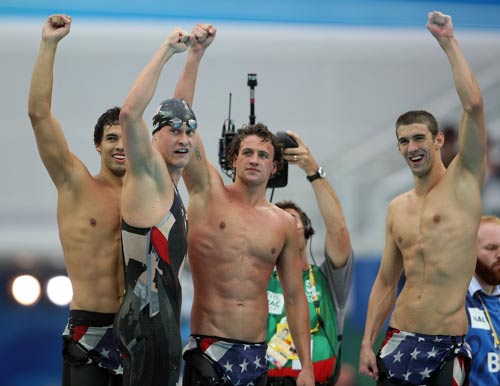
There are more swimmers out there than Michael Phelps. You'd never know it with the way the media covers swimming. Sure none of our other swimmers have gotten as many gold medals, but that doesn't mean we don't have to pay attention. Michael has gotten bigger than the sport and that is absolutely wrong. I'll tell you about some other men and women you should be aware of.
Ryan Lochte is an American swimmer. He's a world record holder and an Olympic gold medalist. He's known for his backstroke, but also does the IM and freestyle relays. He's probably next next most popular male swimmer out there. He's a little more relaxed and low-profile compared to Phelps (but who isn't?), but Phelp's would have as many golds with Ryan's help on relays.
Aaron Peirsol is another reason Phelps got his medals. Aaron is a pure backstroker. He's won numerous gold medals, including every backstroke gold medal in 2004 at Athens. He starts off the medley relay where Phelps does fly.
Natalie Coughlin is a very accomplished female athlete. She has 11 Olympic medals and holds many American records. She's apparently a great cook, because she prepared an Asian dish on the Today Show. She also announced that she is going to be in the next season of dancing with the stars.
 Dagny Knutson is another huge bright spot in the swimming world. She's a 17 year old senior and she broke Katie Hoff's American record in the 400 IM. Had she swam that time in the Olympics in 2008, she would have been 5th. Oh, by the way, she's also from Minot, North Dakota. I've had the pleasure of swimming with her hundreds of times. She's incredibly humble. She's almost as humble as she is hard working. She does two-a-days every day and sometimes adds land practices onto that. A year or two ago I could say that I could keep up with her... Not so much anymore. She is on the fast track to success. She's amazingly successful in the pool, and was just voted high school homecoming queen. How's that for prospective? There she is in front of the pool she and I have swam in for ages.
That's just a few of the athletes. There are many more that are worth mentioning, but I don't wanna go on for forever. Yes, Phelps is fantastic, but he's not the only people we need to be cheering on.
Monday, September 28, 2009
This is why you should swim
Swim. Just trust me.
Your body right now is begging you to swim, but you probably don't even realize it.
There is nothing more beneficial you can physically do for your body. It greatly helps your cardiovascular system, endurance, flexibility, muscle strength, and even your posture. There's very little stress involved in the sport, so you're unlikely to get injured in the pool. You'll look and feel sexier, guaranteed. Isn't it worth an hour or two a week to help your body out?
Swimming is a full body exercise, inside and out. It works every single muscle in your body. Head to toes. ankles to sholders. Abs to back. I could do this all day. Then you need to realize the affects on your inside. Your heart will beat stronger and more efficiently, allowing you to relax more fully. Your lungs become much stronger. I've witnessed benefits with singing and playing the saxophone, because I've got huge strong lungs for a little guy.
You also burn a crazy amount of calories while swimming. Varying with effort, a 150 person can burn 500-800 calories by swimming for just an hour. When you're an athlete training for two-four hours in the pool, you can imagine the amount of calories you can burn. In season I eat. I eat. I eat. When I'm done eating, I eat some more. And that's just breakfast. It doesn't matter what food. It doesn't matter what time of day. Broccoli to bacon. I'm 5' 10' and I'm 140 pounds for one reason only. Swimming, duh. You don't have to swim for hours or even swim laps to help out your body. You can still help your body out and lose weight just by moving around in water a couple times a week.
You will love the way you feel during and after swimming. It's a form of meditation. When your swimming, you don't hear anything. There are no distractions. It's just you thinking about your breathing pattern and the steady beat of your stroke. It can be the most rigorous or relaxing thing in the world, depending on what you want. The pool can leave you intensely awake and refreshed. Imagine that groggy feeling getting blasted away by cold water. You're like a different person afterwords. Now imagine your whole body getting invigorated in water.
Now for my biggest reason why you should swim.
Dana Torres.
 Guess her age. Ummmm... 24, 25? I dunno, I've always been bad at this game. She's actually 41 years old and has a baby girl named Tessa.
...my brain just short circuited for a second there. A little smoke is coming out of my ear.
This woman is looks incredible. She owes that body to dedication to the sport of swimming. She took home a silver medal from Beijing.
If she's 41 now, she's gonna live until she's 200 years old.
Kidding aside, swimmers do have a greater life expectancy than walkers and runners.
Plus, every time you swim, you'll look a little more like Dana here. Guys, you may not admit it, but you wish you had guns like her.
Plus, sometimes I've even heard (though I'll never say it myself) that swimming is a lot of fun. Especially if you have some buddies to go with. You might enjoy the feeling of weightlessness as you glide through water. You might enjoy being mean to yourself, pushing for that extra lap. You might just think water polo is the best sport ever.
What more incentive do you need. You'll look better, feel better, live longer, and have fun.
Your body is begging you.
Just trust me. Swim.
Your body right now is begging you to swim, but you probably don't even realize it.
There is nothing more beneficial you can physically do for your body. It greatly helps your cardiovascular system, endurance, flexibility, muscle strength, and even your posture. There's very little stress involved in the sport, so you're unlikely to get injured in the pool. You'll look and feel sexier, guaranteed. Isn't it worth an hour or two a week to help your body out?
Swimming is a full body exercise, inside and out. It works every single muscle in your body. Head to toes. ankles to sholders. Abs to back. I could do this all day. Then you need to realize the affects on your inside. Your heart will beat stronger and more efficiently, allowing you to relax more fully. Your lungs become much stronger. I've witnessed benefits with singing and playing the saxophone, because I've got huge strong lungs for a little guy.
You also burn a crazy amount of calories while swimming. Varying with effort, a 150 person can burn 500-800 calories by swimming for just an hour. When you're an athlete training for two-four hours in the pool, you can imagine the amount of calories you can burn. In season I eat. I eat. I eat. When I'm done eating, I eat some more. And that's just breakfast. It doesn't matter what food. It doesn't matter what time of day. Broccoli to bacon. I'm 5' 10' and I'm 140 pounds for one reason only. Swimming, duh. You don't have to swim for hours or even swim laps to help out your body. You can still help your body out and lose weight just by moving around in water a couple times a week.
You will love the way you feel during and after swimming. It's a form of meditation. When your swimming, you don't hear anything. There are no distractions. It's just you thinking about your breathing pattern and the steady beat of your stroke. It can be the most rigorous or relaxing thing in the world, depending on what you want. The pool can leave you intensely awake and refreshed. Imagine that groggy feeling getting blasted away by cold water. You're like a different person afterwords. Now imagine your whole body getting invigorated in water.
Now for my biggest reason why you should swim.
Dana Torres.
Guess her age. Ummmm... 24, 25? I dunno, I've always been bad at this game. She's actually 41 years old and has a baby girl named Tessa....my brain just short circuited for a second there. A little smoke is coming out of my ear.
This woman is looks incredible. She owes that body to dedication to the sport of swimming. She took home a silver medal from Beijing.
If she's 41 now, she's gonna live until she's 200 years old.
Kidding aside, swimmers do have a greater life expectancy than walkers and runners.
Plus, every time you swim, you'll look a little more like Dana here. Guys, you may not admit it, but you wish you had guns like her.
Plus, sometimes I've even heard (though I'll never say it myself) that swimming is a lot of fun. Especially if you have some buddies to go with. You might enjoy the feeling of weightlessness as you glide through water. You might enjoy being mean to yourself, pushing for that extra lap. You might just think water polo is the best sport ever.
What more incentive do you need. You'll look better, feel better, live longer, and have fun.
Your body is begging you.
Just trust me. Swim.
Saturday, September 19, 2009
The suits
The recent hoopla about the sport of swimming has been concerning the suits that the athletes are allowed to wear. The swimming association (FINA) banned suits that go below the pelvis and past the shoulders for women, and suits that go past the knees or shoulders for men. Also they must be made with certain materials and can't aid a swimmer's buoyancy.
The change was made to govern the modern swim suits that helped break 108 world records in less than 2 years of their use. It's obvious there was a dramatic difference in the times of athletes wearing these suits.
To understand this issue you need to get a sense of these suits. Here are some tears for you.
Trunks=SLOW
Normal speedo/jammer/women's suit=normal, fine
Outdated racing suit=fast
New high-tech suit=so fast, it's not fair
Let me just say that the difference (if you're a guy) between the trunks you may normally wear are drastically different from the average speedo or jammer that you can buy for 10-20 bucks. Swimming in trunks is about equal to running a sprint with 3 pound ankle weights, or three pounds of ice cream in your stomach. The drag reduced is incredible.
The difference between a good suit and a racing suit is also pretty great. I know, because I've worn some. They're made out of a different kind of material. The water seems to bead off the suit like duck feathers. It should also be incredibly tight. On numerous occasions I've dragged myself out of the water gasping for air, and asked for the timer to unzip my suit (there's a zipper that goes down the back of body suits) to get some air. They're also only good for a few swims. They cost upwards of 100 dollars and they get baggy and draggy after 700 yards or so. It feels good in the water though. Everything feels smooth, like your just walking on the water.
You guessed it, these high tech suits are crazy fast; a huge step up from a good racing suit. I've never worn one, but I'm guessing the feeling is similar. A feeling of frictionlessness, even less than air. Just flying through space like a missile. The feeling comes at a high price though, and I'm sure many countries don't have the funding to build a suit of this stature. That's where the problem begins.
This has become a sport based almost more on technological advances than athletic ability. That's wrong. Every one of my state's highschool records was broken last year at the state meet. Records that were thought to be untouchable. They weren't just broken, they were shattered. All the athletes that took part in the record breaking performances were wearing very high tech suits. They paid hundreds of dollars to break those records. Speed should not come with a price tag. It should come with thousands of hours of pain a sacrifice. That's what swimming is about: self discipline and hard work.
The rule change puts the sport back on an even playing field. Now American can kick the world's butt and the world can't complain about our suits. This is a change for the better. The races are again settled in the pool instead in in the lab.
The change was made to govern the modern swim suits that helped break 108 world records in less than 2 years of their use. It's obvious there was a dramatic difference in the times of athletes wearing these suits.
To understand this issue you need to get a sense of these suits. Here are some tears for you.
Trunks=SLOW
Normal speedo/jammer/women's suit=normal, fine
Outdated racing suit=fast
New high-tech suit=so fast, it's not fair
Let me just say that the difference (if you're a guy) between the trunks you may normally wear are drastically different from the average speedo or jammer that you can buy for 10-20 bucks. Swimming in trunks is about equal to running a sprint with 3 pound ankle weights, or three pounds of ice cream in your stomach. The drag reduced is incredible.
The difference between a good suit and a racing suit is also pretty great. I know, because I've worn some. They're made out of a different kind of material. The water seems to bead off the suit like duck feathers. It should also be incredibly tight. On numerous occasions I've dragged myself out of the water gasping for air, and asked for the timer to unzip my suit (there's a zipper that goes down the back of body suits) to get some air. They're also only good for a few swims. They cost upwards of 100 dollars and they get baggy and draggy after 700 yards or so. It feels good in the water though. Everything feels smooth, like your just walking on the water.
You guessed it, these high tech suits are crazy fast; a huge step up from a good racing suit. I've never worn one, but I'm guessing the feeling is similar. A feeling of frictionlessness, even less than air. Just flying through space like a missile. The feeling comes at a high price though, and I'm sure many countries don't have the funding to build a suit of this stature. That's where the problem begins.
This has become a sport based almost more on technological advances than athletic ability. That's wrong. Every one of my state's highschool records was broken last year at the state meet. Records that were thought to be untouchable. They weren't just broken, they were shattered. All the athletes that took part in the record breaking performances were wearing very high tech suits. They paid hundreds of dollars to break those records. Speed should not come with a price tag. It should come with thousands of hours of pain a sacrifice. That's what swimming is about: self discipline and hard work.
The rule change puts the sport back on an even playing field. Now American can kick the world's butt and the world can't complain about our suits. This is a change for the better. The races are again settled in the pool instead in in the lab.
Monday, September 14, 2009
Phelps
He's the face of the sport. He's master of his domain. He's the king of the pool. He's actually likable. Move over Jordan, there's a new Michael in town.
Phelps has cast his shadow over the sport of swimming, much like Jordan did to basketball. Phelps is the best swimmer in the history of the world. I would consider that to be a pretty big deal. He has won 14 career Olympic gold medals, the most by any Olympian in any sport. He has six world records (counting relays). If you need any more evidence, try and name three other male Olympic swimmers from any country.
Why is he so good? Two reasons.
Phelps is nearly perfectly shaped to be a swimmer. He is 6 foot 4 with a 6 foot 7 arm span and huge hands. He has comparatively small legs (less leg mass, less drag) with size 14 feet. Plus he has double jointed knees and incredibly flexible ankles. Few people in the world are more physically engineered to swim.
He works harder than any other swimmer. In peak training phases, Phelps will swim at least 80,000 meters a week, nearly 50 miles. That includes two practices a day, sometimes three when he's training at altitude. (USA Today) He eats 8,000 to 10,000 calories a day. That's 20 Big Macs a day and look at the guy.
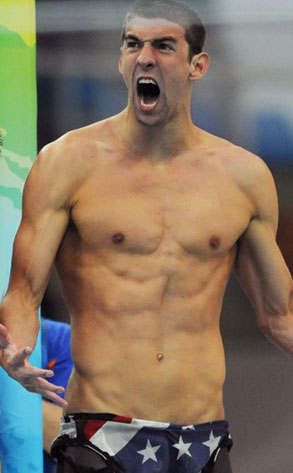 Seriously, look at the guy! He's a beast!
Despite being a beast, he's also one of the most charismatic athletes around. He hosted SNL, that's all I really need to say. He did a pretty good job too, if I do say so myself. Just because I can say more, I will. He's been described as "unbelievably kind hearted" for the way he interacts with children at the pool. He's always swam as a way to cope with his parents divorce when he was nine years old. He's a tough guy not to like...
Unless you're really against marijuana. Shortly after his amazing performance in Beijing, pictures of him smoking pot emerged. OHHHH NOOOOOOO!!! America's sweetheart is found incriminated.
*looking at the picture*
Okay well maybe not America's sweetheart... How about America's secret weapon in World War III.
At any rate, a three month suspension from the sport soon followed. Not too much of a big deal of Phelperz. No important meets were on the horizon. However the marketing fall out must have been a huge deal for a man who makes the majority of his money through advertisements. The decision the companies had to make must have been gut wrenching. On one hand you've got thousands of angry moms cursing the man for being the worst role model in the history of the world. The other hand has the fastest swimmer ever, and he has a sense of humor! The moms won... Temporarily. Many companies dropped him immediately, but now we're starting to see him reemerge in the commercial world.
The question remains, should we forgive him for smoking dope? The answer is very simple. YES! Look at him! I'm not going to question him. He could eat me in a day and still have 1,000 calories left for desert. More importantly, he is one of the hardest working athletes on the planet and he's doing it in The Home of the Brave. Love him or leave him, you must respect him. He's too amazing to turn your back on. Plus he's a pretty cool guy. George W. Bush smoked pot. We made him president. Twice. We can cheer for Phelps. It's hard to blame the guy for celebrating after he won 8 gold medals in the Olympics. He's just unlucky some dick with a camera wanted to make some cash.
Thank you Wikipedia for helping me with this blog :)
I can't wait to see what this guy does next.
Phelps has cast his shadow over the sport of swimming, much like Jordan did to basketball. Phelps is the best swimmer in the history of the world. I would consider that to be a pretty big deal. He has won 14 career Olympic gold medals, the most by any Olympian in any sport. He has six world records (counting relays). If you need any more evidence, try and name three other male Olympic swimmers from any country.
Why is he so good? Two reasons.
Phelps is nearly perfectly shaped to be a swimmer. He is 6 foot 4 with a 6 foot 7 arm span and huge hands. He has comparatively small legs (less leg mass, less drag) with size 14 feet. Plus he has double jointed knees and incredibly flexible ankles. Few people in the world are more physically engineered to swim.
He works harder than any other swimmer. In peak training phases, Phelps will swim at least 80,000 meters a week, nearly 50 miles. That includes two practices a day, sometimes three when he's training at altitude. (USA Today) He eats 8,000 to 10,000 calories a day. That's 20 Big Macs a day and look at the guy.
Seriously, look at the guy! He's a beast!Despite being a beast, he's also one of the most charismatic athletes around. He hosted SNL, that's all I really need to say. He did a pretty good job too, if I do say so myself. Just because I can say more, I will. He's been described as "unbelievably kind hearted" for the way he interacts with children at the pool. He's always swam as a way to cope with his parents divorce when he was nine years old. He's a tough guy not to like...
Unless you're really against marijuana. Shortly after his amazing performance in Beijing, pictures of him smoking pot emerged. OHHHH NOOOOOOO!!! America's sweetheart is found incriminated.
*looking at the picture*
Okay well maybe not America's sweetheart... How about America's secret weapon in World War III.
At any rate, a three month suspension from the sport soon followed. Not too much of a big deal of Phelperz. No important meets were on the horizon. However the marketing fall out must have been a huge deal for a man who makes the majority of his money through advertisements. The decision the companies had to make must have been gut wrenching. On one hand you've got thousands of angry moms cursing the man for being the worst role model in the history of the world. The other hand has the fastest swimmer ever, and he has a sense of humor! The moms won... Temporarily. Many companies dropped him immediately, but now we're starting to see him reemerge in the commercial world.
The question remains, should we forgive him for smoking dope? The answer is very simple. YES! Look at him! I'm not going to question him. He could eat me in a day and still have 1,000 calories left for desert. More importantly, he is one of the hardest working athletes on the planet and he's doing it in The Home of the Brave. Love him or leave him, you must respect him. He's too amazing to turn your back on. Plus he's a pretty cool guy. George W. Bush smoked pot. We made him president. Twice. We can cheer for Phelps. It's hard to blame the guy for celebrating after he won 8 gold medals in the Olympics. He's just unlucky some dick with a camera wanted to make some cash.
Thank you Wikipedia for helping me with this blog :)
I can't wait to see what this guy does next.
Saturday, September 5, 2009
Swimming is pretty cool
Why on Earth should you be interested in swimming?
You have some American pride buried within you somewhere. The U.S. has 11 of the 32 major man's and woman's olympic swimming records. Phelps contributes to 8 of them. Our American athletes are kicking worldwide ass. These guys are some of the hardest working athletes on Earth, and they're doing it to honor their country (and maybe for a little personal glory). We ought to be watching the carnage wide eyed with handfuls of popcorn. Who wouldn't want to watch a cocky French foursome eat our bubbles?
What these athletes do is simply amazing. It's easy to marvel at a man throwing a baseball over 100 miles an hour. It's fun to watch 300 pound men fight over a strangely shaped piece of pigskin. It's equally awe inspiring to watch a man fly through the air, as streamlined as a missile, and enter water without an ounce of friction. If you spend even the smallest moment analyzing their strokes you'll be amazed. The immense power in their dolphin kicks. The agility in a flip turn. The flexibility in a backstroke start. You can't do this stuff. I can't do this stuff. These subtle displays are far more stimulating to me than watching a 7 footer put a ball in a 10 foot high circle.
If you're a woman, the buff shirtless 6 packing men can't hurt.
If you're a man, watching shirtless women that could kick your ass might not hurt.
Hey, sex sells, right?
The difference between gold and silver in last year's Olympics was .01 seconds in the 100 butterfly. This sport is gripping. This sport is exciting. Big swim meets are twice as loud as football games. All the fans do is scream. Go to a swim meet, you'll be sucked into the intensity like a little girl gets sucked into Hannah Montana. Swim meets are not boring on TV and they're not boring in person. You don't have to know anything about swimming to be impressed. I love baseball... but boy is it more fun to watch swimming.
Plus you've got a global charismatic icon in Phelps, controversy over technology, and 41 year old stud Dana Torres. What's not to like?
If you've paid any attention to the sport you can back me up on this stuff. If you haven't, you don't know what your missing. Luckily for you, it's not too hard to figure out what you're missing. Turn on the tv and take a look. Maybe you'll get lucky. If not, grab a friend and mosey on over to your local high school or college meet. You won't regret it!
You have some American pride buried within you somewhere. The U.S. has 11 of the 32 major man's and woman's olympic swimming records. Phelps contributes to 8 of them. Our American athletes are kicking worldwide ass. These guys are some of the hardest working athletes on Earth, and they're doing it to honor their country (and maybe for a little personal glory). We ought to be watching the carnage wide eyed with handfuls of popcorn. Who wouldn't want to watch a cocky French foursome eat our bubbles?
What these athletes do is simply amazing. It's easy to marvel at a man throwing a baseball over 100 miles an hour. It's fun to watch 300 pound men fight over a strangely shaped piece of pigskin. It's equally awe inspiring to watch a man fly through the air, as streamlined as a missile, and enter water without an ounce of friction. If you spend even the smallest moment analyzing their strokes you'll be amazed. The immense power in their dolphin kicks. The agility in a flip turn. The flexibility in a backstroke start. You can't do this stuff. I can't do this stuff. These subtle displays are far more stimulating to me than watching a 7 footer put a ball in a 10 foot high circle.
If you're a woman, the buff shirtless 6 packing men can't hurt.
If you're a man, watching shirtless women that could kick your ass might not hurt.
Hey, sex sells, right?
The difference between gold and silver in last year's Olympics was .01 seconds in the 100 butterfly. This sport is gripping. This sport is exciting. Big swim meets are twice as loud as football games. All the fans do is scream. Go to a swim meet, you'll be sucked into the intensity like a little girl gets sucked into Hannah Montana. Swim meets are not boring on TV and they're not boring in person. You don't have to know anything about swimming to be impressed. I love baseball... but boy is it more fun to watch swimming.
Plus you've got a global charismatic icon in Phelps, controversy over technology, and 41 year old stud Dana Torres. What's not to like?
If you've paid any attention to the sport you can back me up on this stuff. If you haven't, you don't know what your missing. Luckily for you, it's not too hard to figure out what you're missing. Turn on the tv and take a look. Maybe you'll get lucky. If not, grab a friend and mosey on over to your local high school or college meet. You won't regret it!
Wednesday, August 26, 2009
first things first
Welcome to swimming-101: your intro course to everything you need to know about swimming (and maybe even some things you don't need to know). This blog will cover everything from benefits of swimming, to basic stroke breakdown, to popular athletes, and even cover some swimming politics. I can't wait to DIVE into the subject and (cheesy puns aside) I hope you can't wait to read.
About me: My name is Lee I'm a college student at the University of Mary in Bismarck. I have been racing in the pool for 13 years. If it means anything to you, I swim my 50 yard free in the 21 second range. If it doesn't, I'll just say that I'm a respectable swimmer. I have recently hung up the Speedo in favor of a more academic based lifestyle, but that doesn't take away all the blood, sweat, and tears I've left in the pool. I'm still passionate about the sport and I want to share that with others.
About me: My name is Lee I'm a college student at the University of Mary in Bismarck. I have been racing in the pool for 13 years. If it means anything to you, I swim my 50 yard free in the 21 second range. If it doesn't, I'll just say that I'm a respectable swimmer. I have recently hung up the Speedo in favor of a more academic based lifestyle, but that doesn't take away all the blood, sweat, and tears I've left in the pool. I'm still passionate about the sport and I want to share that with others.
Subscribe to:
Posts (Atom)
